Invasive plant
Garlic mustard
Alliaria petiolata
Garlic mustard identification: a first-year rosette, a second-year flower stem and a garlic smell when a leaf is crushed.
Published Last reviewed
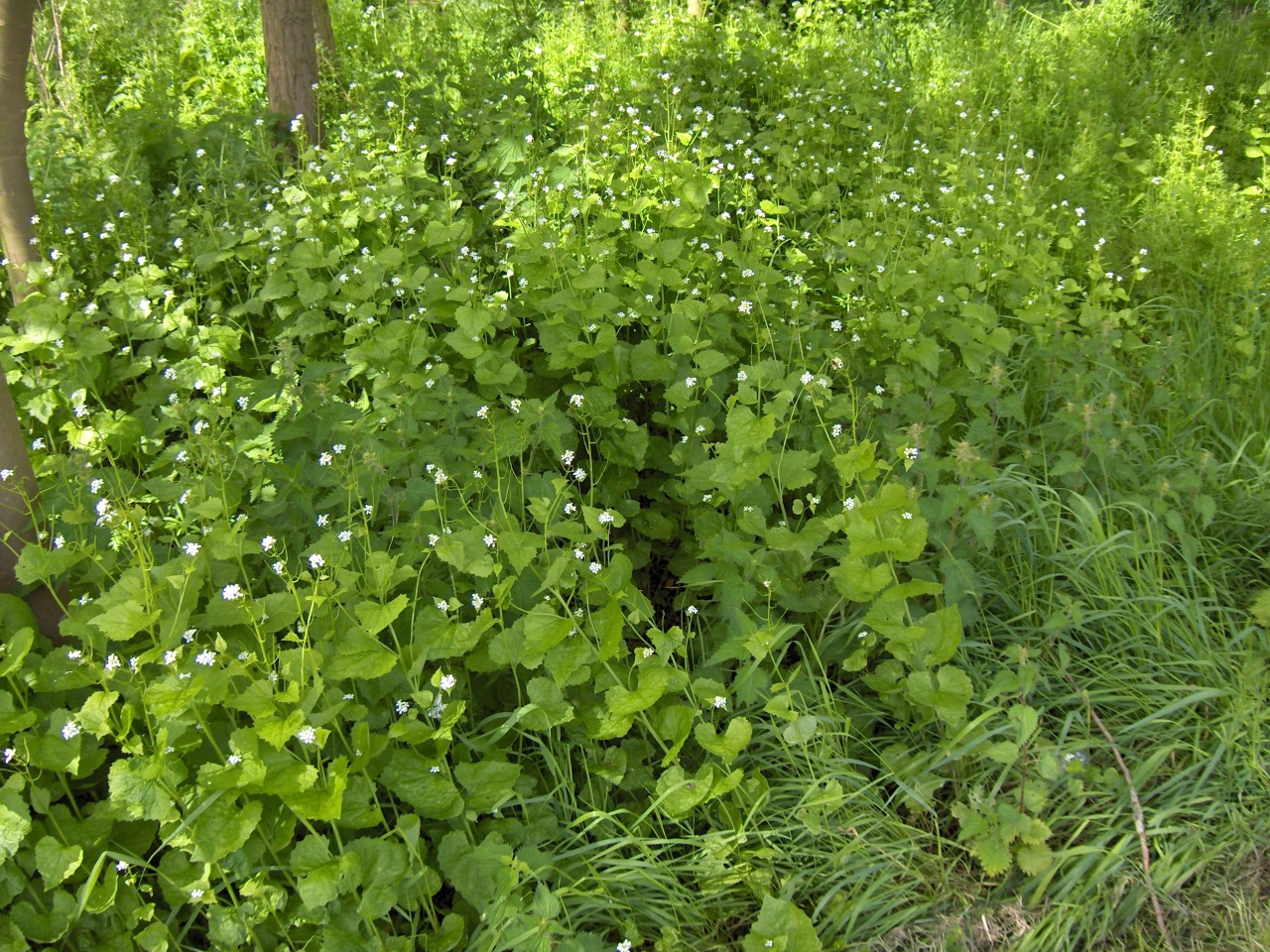
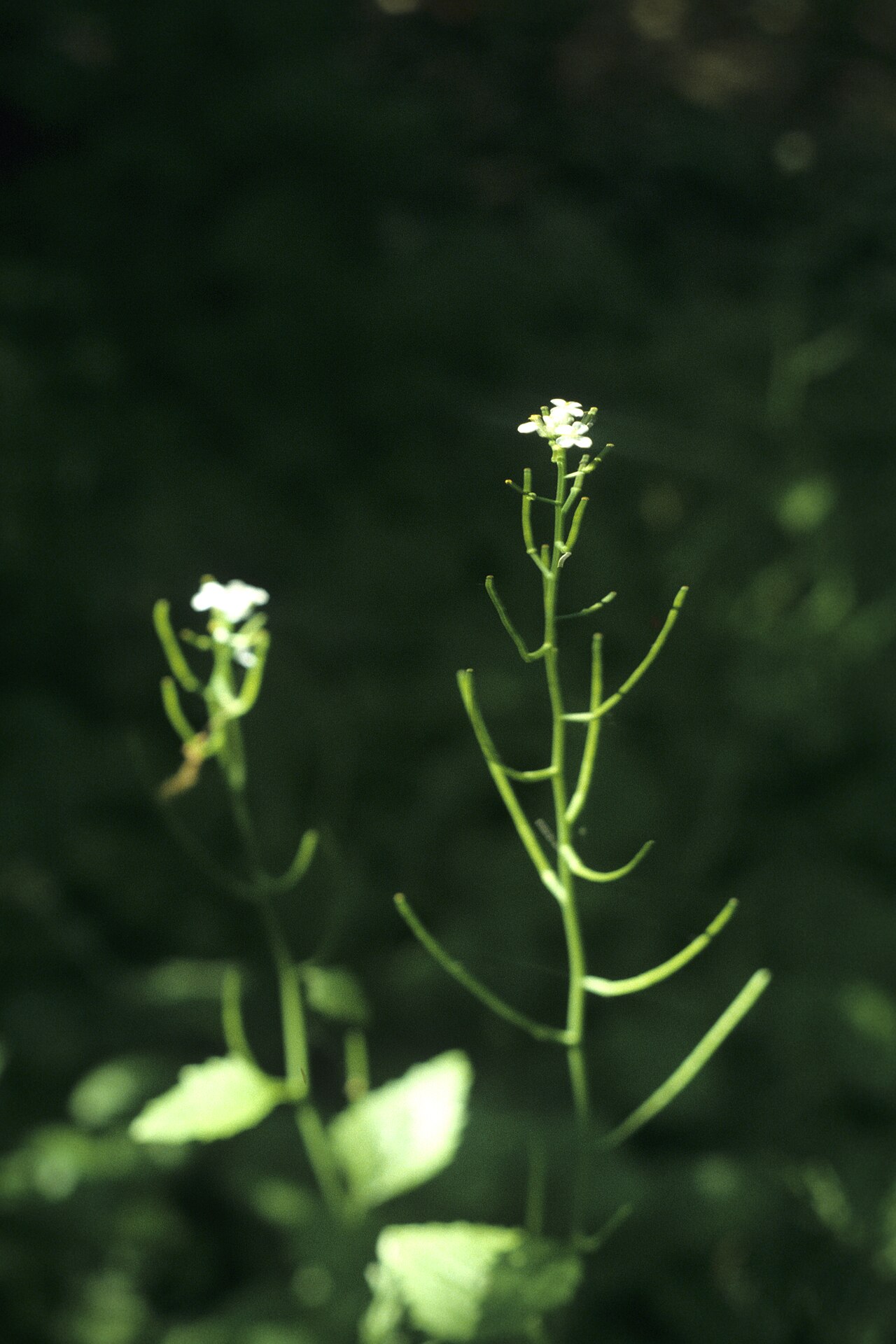
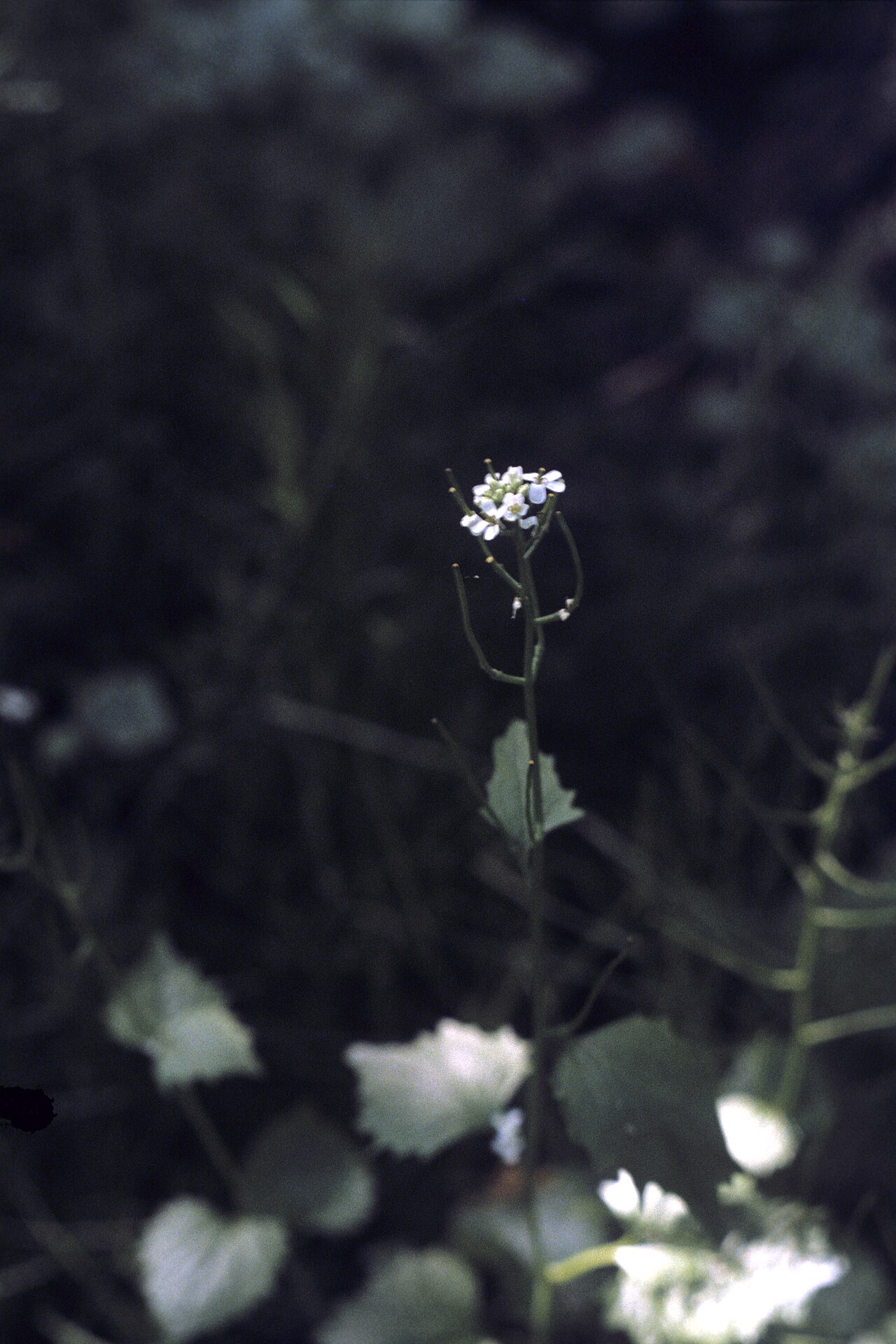
Garlic mustard is a biennial in the mustard family brought to North America by early European settlers. It was first documented in New York in 1868 and was used as a source of food and medicine. It now grows from coast to coast in moist, rich soils and is especially troublesome in shaded woodlands.
Identification
Look for the combination of characters below. A single feature is rarely enough, especially when a native look-alike is present.
- First-year rosette
- A ground-level rosette usually less than 8 inches tall. Leaves are kidney-shaped with rounded teeth, usually less than 4 inches across, and smell of garlic when crushed.
- Second-year stem
- The flowering stem can range from a few inches to 3 feet tall. Stem leaves are heart-shaped, 2 to 4 inches across, with pointed, irregular teeth.
- Flowers
- Clusters of white, four-petaled flowers appear at the growing tip, beginning in early spring and continuing through early summer. Flowering is often staggered within a population.
- Seed pods
- Flowers are replaced by branched stems of slender green siliques that turn brown and brittle when ripe. Each tiny brown seed is less than a quarter inch long.
- Odour
- Crushed leaves and stems have a distinct garlic smell. This separates garlic mustard from several native plants with similar white flowers or leaf shapes.
Look-alikes
-
Cut-leaf toothwort
Cardamine concatenata
Cut-leaf toothwort has compound leaves and white four-petaled flowers. Garlic mustard has simple kidney- or heart-shaped leaves and a garlic odor when crushed.
-
Sweet cicely
Osmorhiza claytonii
Sweet cicely blooms at about the same time and can be confused at a glance. Check the leaf shape and crush a leaf. Garlic mustard smells strongly of garlic.
-
Creeping charlie
Glechoma hederacea
Creeping charlie leaves can resemble first-year garlic mustard, but creeping charlie does not have a garlic odor when crushed and grows as a trailing perennial.
Range and status
Native range: Europe
Regulatory status by state
-
Pennsylvania Noxious weed
Garlic mustard is a Class B noxious weed on the Pennsylvania Department of Agriculture list. Noxious weeds cannot be sold, transported, planted or otherwise propagated in the state. Class B means the plant is widely established and cannot feasibly be eradicated.
-
New York Prohibited
Garlic mustard is prohibited under 6 NYCRR Part 575. Prohibited plants cannot be sold, imported, purchased, transported, introduced or propagated in New York.
-
virginia Noxious weed
Garlic mustard is a Tier 3 noxious weed in Virginia under 2VAC5-317-20. Moving a listed noxious weed requires a valid certificate or permit.
-
Ohio Prohibited
Garlic mustard is on Ohio's invasive plant list under OAC 901:5-30-01, which bans selling, propagating, distributing, importing or intentionally spreading it.
-
Wisconsin Restricted
Wisconsin classifies garlic mustard as Restricted under NR 40. Restricted species cannot be transported, transferred or introduced without a permit; possession is allowed except for fish and crayfish, and control is encouraged but not required.
Why it matters
Garlic mustard spreads from forest edges into mature forest understories and can form dense monocultures that leave little room for native plants. It produces many seeds and releases antifungal chemicals into the soil that can disrupt associations between native plants and mycorrhizal fungi. Its seedbank persists for years, so control requires a multi-year plan.
Management
Pull before seed pods develop
Garlic mustard has a taproot and does not regenerate from root fragments, so hand-pulling can be effective. Pull before flowers or siliques develop, remove the entire taproot, and bag material if flowering or seed pods are present. Plants pulled before silique development can be left on site.
Bag flowering and seeding plants
Studies cited by Penn State Extension found that pulled plants bearing siliques, even unripe ones, can still develop viable seed. Bag and remove those plants from the site rather than leaving them on the ground.
Treat rosettes selectively
Herbicide treatments should be timed before a significant number of plants flower and develop siliques. Spot treatment of rosettes in late fall through early spring can reduce damage to desirable plants. Follow the product label and state law, and confirm the approach with your extension service.
Plan for the seedbank
Seeds remain viable in the soil for more than five years, and Wisconsin DNR reports at least seven years. A single spring pull will not clear a woodland site; expect to return for several seasons and to monitor for new germination.
Replant or protect the bare ground
Disturbance creates open space that garlic mustard seed can exploit. Preserve native groundcover where possible and consider a site-appropriate replacement plan with your extension service.
Sources
Facts on this page were checked against the sources below. Each link shows the date the source was accessed.
- Garlic Mustard — Penn State Extension Accessed November 3, 2026
- Garlic mustard (Alliaria petiolata) — Wisconsin Department of Natural Resources Accessed November 3, 2026
- Alliaria petiolata (M. Bieb.) Cavara & Grande (garlic mustard) — USDA NRCS PLANTS Database Accessed November 3, 2026
- 7 Pa. Code Chapter 110. Noxious Weeds — Pennsylvania Code Accessed November 3, 2026
Related pages
-
How to Dispose of Invasive Plants Safely
How to dispose of invasive plants: bag roots, tubers and seed heads, solarize the sealed bags, then trash them. Do not compost or send them to yard waste.
-
How to Get Rid of Garlic Mustard Before It Seeds
How to get rid of garlic mustard: pull before the seed pods form, bag every plant, and plan for years of follow-up from the seed bank.
-
How to Get Rid of Invasive Plants Without Chemicals
How to get rid of invasive plants without chemicals: pull, dig, cut on a schedule, smother or solarize. Where vinegar and boiling water fall short.
-
How to Get Rid of Invasive Plants: A Step-by-Step Guide
How to get rid of invasive plants: identify it, check state rules, choose a method by root type, dispose of every fragment, then monitor regrowth.
-
Spring Invasive Plants Checklist: What to Look For in March, April, May and June
Spring invasive plants checklist: what to look for and act on each month from March through June, with links to species and removal guides.
-
New York regulation and reporting
Invasive plants in New York: 6 NYCRR Part 575 prohibits 69 plants and regulates six others, which may still be sold with a warning label.
-
Ohio regulation and reporting
Invasive weeds in Ohio: one rule bans the sale and propagation of 63 plants, while a separate noxious weed rule requires management of a shorter list.
-
Pennsylvania regulation and reporting
Invasive plants in Pennsylvania are listed in three noxious weed classes. Class B includes Japanese knotweed, tree of heaven and garlic mustard.
-
Wisconsin regulation and reporting
Garlic mustard in Wisconsin is Restricted under the state invasive species rule NR 40, which controls transport, transfer and introduction.